Green, Air-Dried, or Kiln-Dried? The Right Lumber Depends on What You Are Building
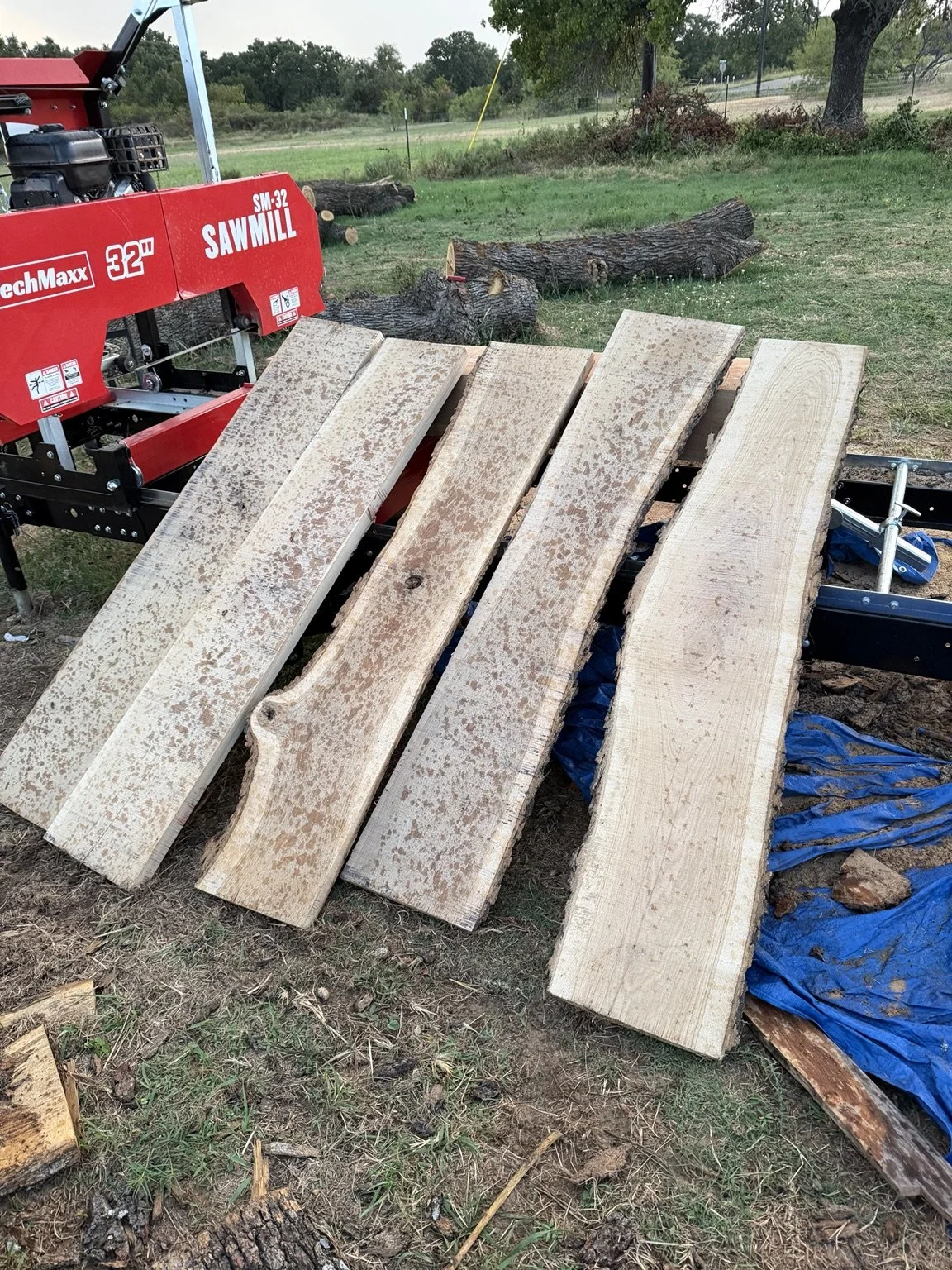
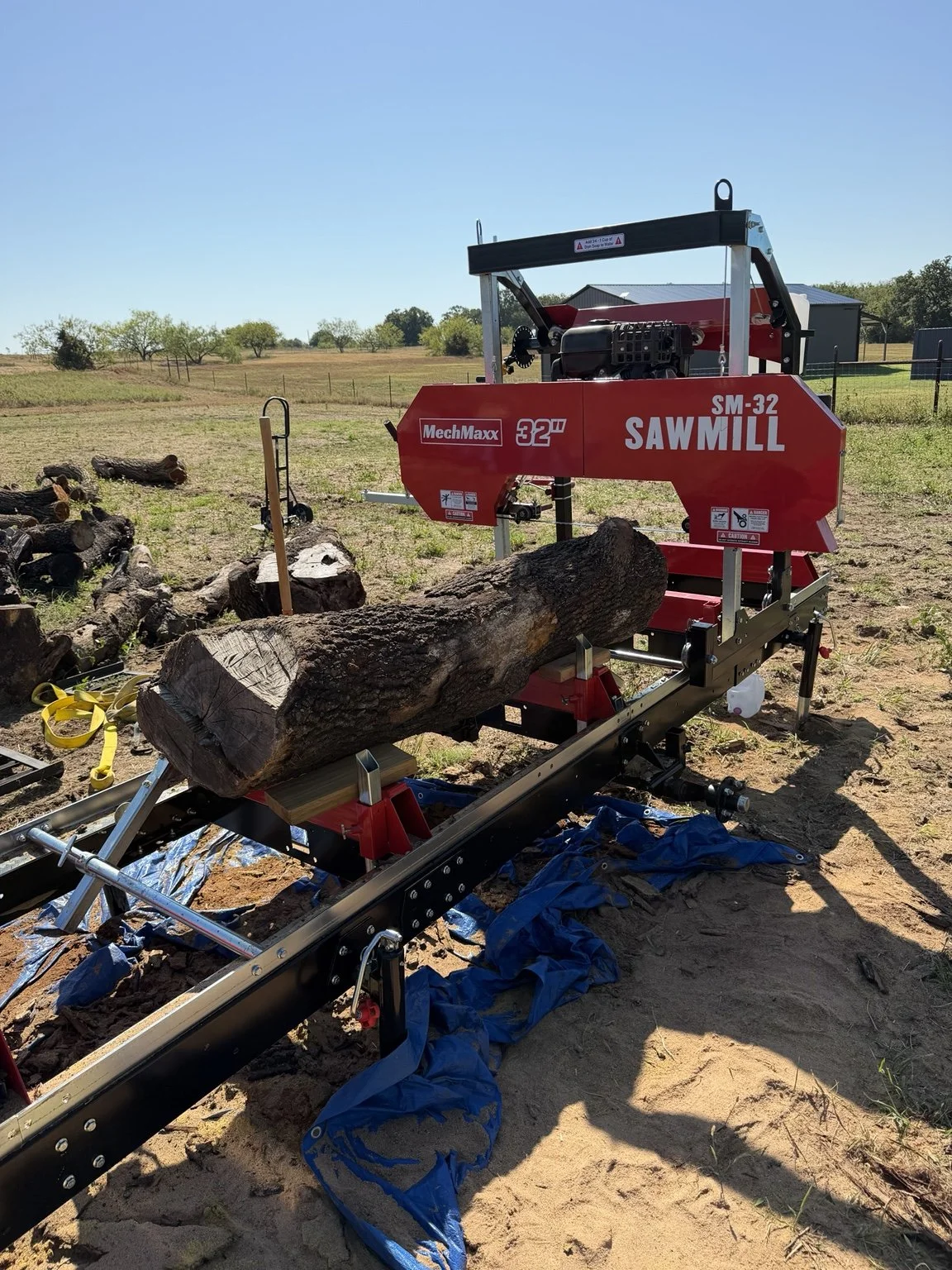
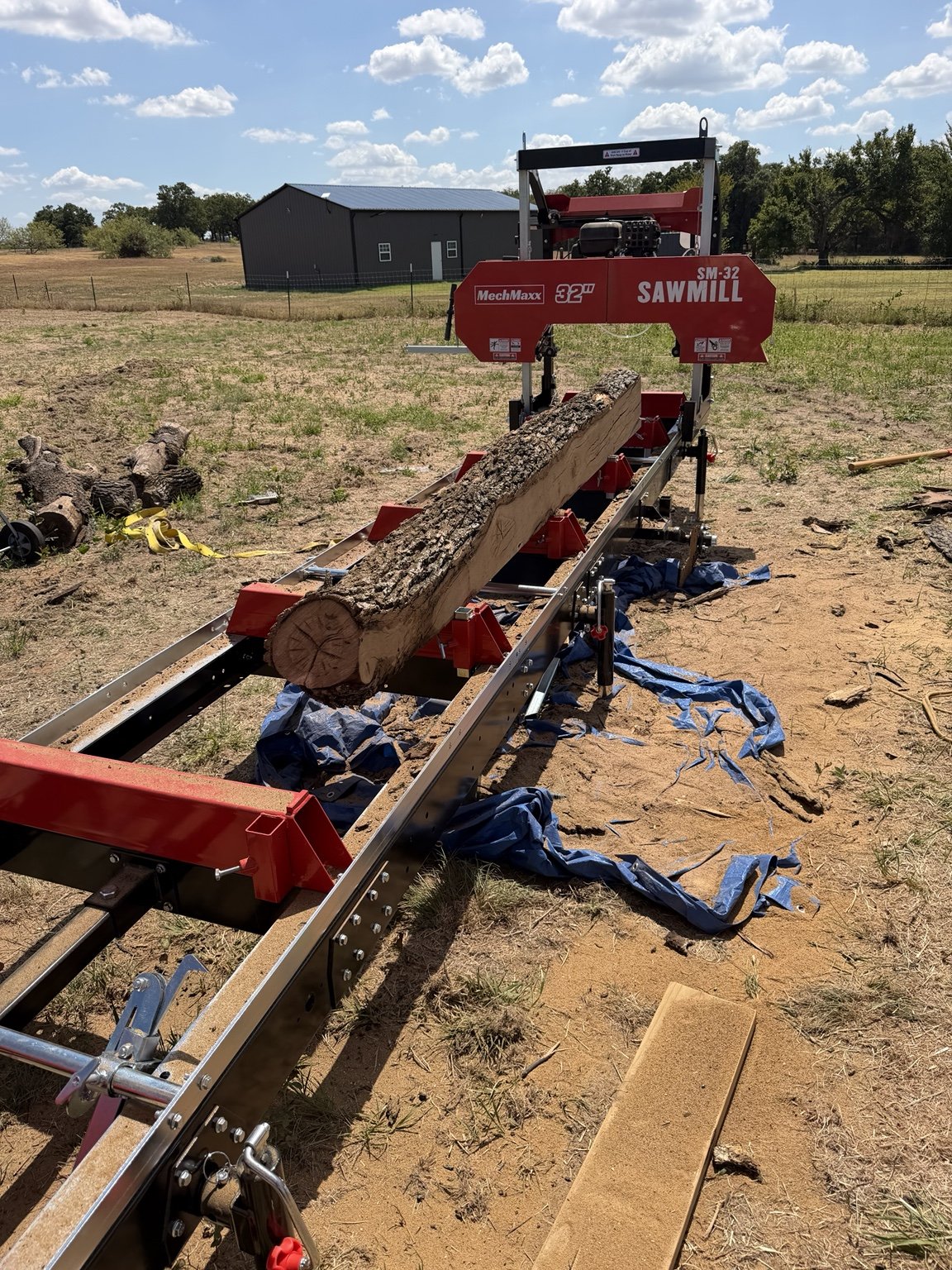
Fresh lumber coming off a sawmill is one of the best sights in this work. A log that looked rough on the outside opens into wide boards, color, grain, knots, figure, and sometimes a surprise nobody could see under the bark.
But the first cut is not the end of the process.
Freshly milled wood still carries water. Sometimes a great deal of it. That lumber may be exactly right for a timber frame, a fence, a carving blank, or another project designed around green wood. It may be ready to begin air drying for an outdoor table. Or it may need months of careful drying and a controlled kiln cycle before I would trust it in a dining table, cabinet, cutting board, or another piece headed into an air-conditioned house.
Green, air-dried, and kiln-dried are not three grades from bad to good. They are three moisture conditions and three different tools. The right one depends on what the wood is going to become.
First, What Does Moisture Content Mean?
Wood moisture content is the weight of the water in a piece of wood compared with the oven-dry weight of the wood itself. That definition explains why green wood can test above 100 percent moisture content: the water can weigh more than the dry wood fiber.
Freshly cut lumber varies widely. Species matters. Sapwood and heartwood can differ. Two boards from the same log can differ. Technical references give broad green-lumber ranges running from roughly 45 percent to well above 100 percent, and some low-density species can hold still more. That is why I do not look at a fresh board and assign it a moisture number by appearance.
Water in wood exists in two main places. Free water sits in the cell cavities. Bound water is held in the cell walls. As green lumber begins to dry, much of the free water leaves first. The board loses weight, but most dimensional shrinkage begins when bound water starts leaving the cell walls below the fiber saturation point. For most species, that point is somewhere around 25 to 30 percent moisture content, not one exact number for every wood.
Below that point, moisture loss and dimensional change become closely connected.
Wood Never Stops Responding to the Air
Drying does not make wood inert. Wood is hygroscopic, which means it continues to exchange moisture with the surrounding air.
If the air around a board becomes more humid, the wood tends to gain moisture. If the air becomes drier, it tends to lose moisture. Equilibrium moisture content, or EMC, is the moisture level at which the wood is neither gaining nor losing moisture under those conditions.
That equilibrium moves when the environment moves.
An outdoor bench in North Texas sees heat, rain, dry wind, humid mornings, and seasonal changes. A dining table inside an air-conditioned home sees a much narrower and usually drier range. USDA long-term data put outdoor equilibrium conditions around Dallas–Fort Worth roughly in the 11 to 13 percent range across the year, but exposed wood can move outside that range when rain, direct sun, poor ventilation, or ground contact enter the picture. For hardwood furniture, cabinets, flooring, and millwork in typical conditioned interiors, common kiln-dried targets are closer to 6 to 8 percent.
Those are useful guides, not magic numbers. The important rule is simpler: bring the lumber reasonably close to the moisture conditions it will see in service before final machining and assembly.
A finish can slow moisture movement. It cannot stop it. That is why sound furniture is designed to allow seasonal movement even when the lumber was dried correctly.
What Happens When Lumber Is Too Wet for the Job?
A wet board can look flat and behave well while it is still in the stack. The trouble may show up after it has been cut, joined, finished, or carried into a heated or air-conditioned room.
Wood does not shrink equally in every direction. It normally changes much more across the grain than along its length, and tangential movement around the growth rings is generally greater than radial movement across them. That unequal movement is one reason flatsawn boards and quartersawn boards behave differently.
When moisture leaves unevenly, several problems can follow:
Checking and splitting: The surface or ends dry and shrink while the core is still wetter and holding them back. Small checks can deepen into serious cracks.
Cupping: The edges of a board move out of the same plane as the center.
Bowing and crooking: A board bends along its face or edge.
Twisting: Corners move out of plane as grain direction and shrinkage work against each other.
Internal stress: Drying too aggressively can leave the shell and core under opposing stresses. A board may look sound until it is ripped or planed and then move as those stresses are released.
Joint failure or movement: Mortise-and-tenon joints, glued panels, breadboard ends, doors, drawers, and tabletops can loosen, bind, crack, or push against surrounding parts.
Finish trouble: Wet wood can interfere with machining, gluing, sanding, and finishing, and later shrinkage can expose unfinished lines or create ridges at joints.
The point is not that every wet board will fail in every project. The point is that the project must either wait for the right moisture level or be designed honestly around the movement that will occur.
Green-Cut Lumber
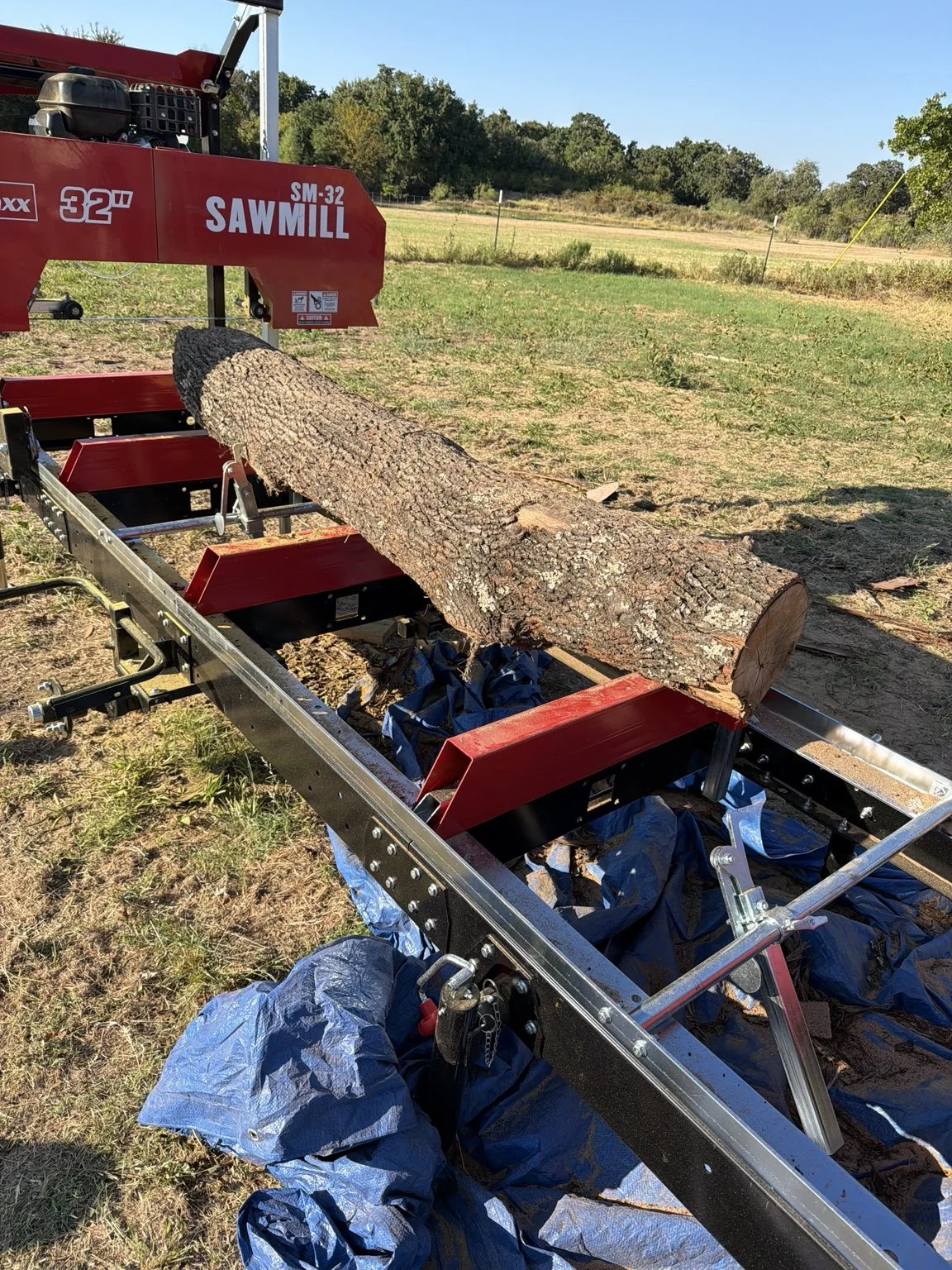
Green lumber is freshly sawn or still contains enough moisture that it has not been dried toward its intended service condition. “Green” does not mean rotten, weak, or defective. It means wet relative to dried lumber.
Green wood is heavier, easier to cut in some carving and turning operations, and often more flexible for bending. Thick timbers have also been joined green for centuries because fully drying a large beam before construction can take an impractical amount of time.
The tradeoff is movement. Green boards will shrink below fiber saturation, and they may check or distort as they dry. Fasteners can loosen. Joints can change. A green timber may develop surface checks that are expected in that kind of construction but would be unacceptable in a cabinet door.
Green lumber works when the builder understands those changes and the design allows for them.
Five Good Uses for Green Lumber
1. Heavy timber and post-and-beam construction
Large beams are often assembled before they are dry all the way through. Traditional joinery can be laid out to account for shrinkage, and connections may need inspection or tightening as the timbers season. Structural work still requires proper design, suitable species, sound material, and compliance with local grading and code requirements.
2. Agricultural and rustic structures
Barn components, equipment shelters, sheds, and other utility structures can sometimes use green material where small changes in dimension are acceptable. The design must allow ventilation, drainage, shrinkage, and fastener movement. Green wood is not an excuse to ignore decay exposure or structural loads.
3. Fences, gates, and rough exterior work
Green boards and posts can serve in fences and other outdoor utility projects when spacing and fastening anticipate shrinkage. Species durability, ground contact, treatment requirements, and hardware choice still decide how long the work will last.
4. Green carving and rough turning
Spoon blanks, bowl blanks, and carved pieces are often easier to shape while wet. A turner may rough-turn a thick bowl, leave extra material, dry it slowly, and return it to the lathe for final truing. The drying stage is part of the process, not an afterthought.
5. Bending work
Suitable straight-grained green stock can be a good starting point for steam bending and other controlled bending work. Species, grain runout, thickness, bend radius, heat, moisture, and the bending form all matter. Green does not mean every board will bend successfully.
Air-Dried Lumber
Air drying uses the surrounding climate and controlled stacking rather than a heated commercial kiln. Boards are stacked on a level base with evenly spaced stickers between layers so air can move through the pile. The stack needs protection from rain and direct sun, open sides for airflow, aligned stickers, and enough top weight or restraint to help keep boards flat.
Air drying is simple in principle but not casual in practice. Dry too slowly and stain or decay can develop. Dry too quickly and the board surfaces or ends can check. Thick stock, wide slabs, oak, and other slow-drying material need more patience than thin boards from faster-drying species.
Time is not a specification. The familiar “one year per inch” saying is too crude to use as a promise. Species, thickness, initial moisture, season, airflow, pile design, and weather can change drying time dramatically.
Air-dried lumber eventually approaches the outdoor equilibrium conditions around the stack. In North Texas, that can produce useful material for many exterior and rustic applications. It usually will not, by outdoor air drying alone, reach the lower and more uniform moisture condition expected for fine furniture in a climate-controlled room.
Five Good Uses for Air-Dried Lumber
1. Outdoor tables and benches
Properly air-dried stock can be well suited to picnic tables, garden benches, and outdoor dining furniture. The design should shed water, avoid trapping moisture, use suitable joinery and fasteners, and leave room for cross-grain movement.
2. Fences, gates, trellises, and garden structures
These projects live outdoors, so drying wood far below its outdoor service condition offers limited benefit. What matters is that the stock is dry enough to machine and assemble predictably, and that the species and finish fit the exposure.
3. Sheds, barns, and shop or farm fixtures
Air-dried lumber can be appropriate in unconditioned buildings where small seasonal movement is acceptable. Structural pieces still must meet the engineering, grading, and code requirements for the job.
4. Timber frames and thick rustic members
A large member may be partly seasoned rather than furniture-dry. Air drying can remove substantial water before joinery and reduce later movement, even when the center remains wetter than the surface. The builder must plan for continued checking and shrinkage.
5. Staged turning, carving, slabs, and valuable thick stock
Air drying is often a useful first stage. A rough-turned bowl can dry before final turning. Thick slabs can lose moisture slowly before a controlled kiln finish. Valuable hardwood can be pre-dried to reduce the time and energy needed later. In each case, the wood is measured before final use rather than declared ready because a calendar date arrived.
Kiln-Dried Lumber
A conventional dry kiln is an insulated chamber that controls heat, relative humidity, and forced airflow according to a schedule suited to the species, thickness, starting moisture, and intended use. Commercial schedules can be adjusted as the lumber loses moisture. Some cycles also equalize moisture differences among boards and condition the load to reduce drying stresses.
That control is why kiln-dried lumber is especially important for indoor furniture, cabinetry, cutting boards, flooring, millwork, glued panels, and tight joinery. These projects need boards that can be machined accurately, glued reliably, finished well, and placed in a conditioned room without a large first-season change.
Kiln drying does not mean the wood will never move again. A board dried to 7 percent and then stored for months in an open shed will gain moisture. A kiln-dried tabletop still needs joinery that permits cross-grain movement. The kiln brings the wood to a suitable, measurable starting condition; good storage and construction have to preserve that advantage.
The words “kiln dried” also do not prove that lumber has received a certified insect-killing heat treatment. Phytosanitary heat treatment depends on reaching a specified core temperature for a specified duration and documenting the process. A drying cycle should not be described as sterilization unless it actually meets the applicable requirement.
What a Solar Kiln Actually Does
A solar kiln sits between open-air drying and a conventional commercial kiln. It uses solar energy to warm the chamber, but successful drying still depends on airflow, moisture removal, stack design, and monitoring.
Sunlight entering the collector or glazed surface heats the kiln interior and the air around the lumber. Fans move that warmed air across and through the stickered stack. Heat gives the moisture in the wood more energy to migrate from the wetter interior toward the surface. Moving air picks up that moisture. Vents or other humidity-management methods allow moisture-laden air to leave so the kiln does not simply become a warm, wet room.
Stickers are essential. They create uniform air passages between every layer. If stickers are misaligned, irregularly spaced, or missing, air takes the easiest route around the lumber instead of through it, and boards can sag or warp.
Compared with leaving the same lumber in an outdoor stack, a well-designed and correctly operated solar kiln can produce a lower, more uniform moisture content in much less time. It can also protect the load from rain and give the operator more influence over drying conditions.
But a solar kiln is not automatic.
The Advantages and Limits of Solar Drying
Solar energy keeps operating cost low, and a small solar kiln can be practical for a working sawmill or woodshop that handles local logs in modest batches. It can finish lumber below the outdoor air-dry limit, shorten the path to usable stock, and provide better protection and airflow than an exposed pile.
Its limitations are just as important:
Weather changes the available heat. Cloud cover, season, sun angle, and outdoor temperature affect performance.
Species and thickness matter. Thick oak does not dry like thin pine. Dense, refractory, wide, or figured stock often needs a gentler schedule.
Starting moisture matters. A kiln sized to finish pre-dried lumber may be overloaded by a large charge of soaking-wet green stock.
Drying rate must be controlled. Too much collector area, heat, or venting early in the cycle can pull the surface dry while the core stays wet, creating checks and internal stress.
Airflow must be uniform. Fans, baffles, stickers, pile width, and open gaps all determine whether air passes through the lumber evenly.
A dry surface is not proof of a dry board. Moisture gradients can remain, especially in slabs and thick stock. Readings need to represent multiple boards and useful depths.
Final moisture must be verified. The operator needs corrected moisture-meter readings, sample boards, or another sound method. Time in the kiln is not a measurement.
A solar kiln also does not offer the same precision or all-weather production rate as a commercial steam or dehumidification kiln. Conventional kilns can hold and change temperature and humidity on a defined schedule, reverse or balance airflow, and perform equalizing or conditioning steps with greater repeatability. Solar kilns depend more heavily on weather and operator judgment.
Used correctly, a solar kiln is a real kiln. Used carelessly, it is only a hot shed.
Green Cut vs. Air Dried vs. Kiln Dried
Green cut
Moisture condition: Often above fiber saturation; actual MC varies enormously by species and tree and can exceed 100%.
Drying time: No drying period yet.
Dimensional stability: Low unless the design deliberately accommodates continued drying.
Advantages: Easy to carve or rough-turn, useful for bending, and thick timbers can be worked without waiting years.
Limitations: Heavy and still shrinking below fiber saturation, with risk of checks, warp, loose fasteners, and changing joints.
Best uses: Designed-for-green timber work, some farm and rustic structures, fencing and utility work, green carving and turning, and suitable bending stock.
Air dried
Moisture condition: Approaches outdoor EMC; in North Texas this is commonly above conditioned-interior furniture targets and varies by season and exposure.
Drying time: Weeks to many months or longer, depending on species, thickness, season, and stack.
Dimensional stability: Moderate for outdoor or unconditioned service; it may still move substantially indoors.
Advantages: Low energy use, practical for exterior work, and useful as pre-drying for slabs and hardwood.
Limitations: Weather-dependent, slower and less uniform, with stain, checking, and rewetting risk; often not low enough for fine interior work.
Best uses: Outdoor furniture, fences, garden structures, sheds and barns, rustic or timber work, and staged slabs or turning stock.
Solar-kiln dried or conventionally kiln dried
Moisture condition: Can be brought below outdoor EMC toward a verified end-use target. Furniture hardwood is often 6 to 8 percent, while exterior targets are generally higher.
Drying time: Solar drying is weather- and design-dependent but usually faster than air drying. Conventional drying is schedule-controlled and generally more predictable.
Dimensional stability: Highest when the final MC matches the service environment and drying stress is controlled.
Advantages: Lower and more uniform MC for better machining, gluing, finishing, and tight joinery; solar drying can reduce energy cost.
Limitations: Requires correct schedule, airflow, stacking, and measurement. Drying too fast can damage lumber, and wood still moves after drying.
Best uses: Indoor furniture, cabinetry, cutting boards, flooring, millwork, glued assemblies, and solar finishing of properly managed shop lumber.

How We Decide at Liberty Woodworks
At Liberty Woodworks, the drying plan starts with the finished job, not with a label on a lumber stack.
An outdoor table built for a North Texas patio may be a good candidate for properly air-dried stock because it will live close to outdoor equilibrium and the construction can allow movement. A timber or rustic agricultural project may use partly seasoned or green material if its joinery and fasteners are designed for continued drying.
A wide slab may need slow air drying first, with sealed ends and careful stacking, before it goes through a controlled finishing stage. Pushing a thick, wet slab too hard is a good way to turn valuable wood into cracks and internal stress.
Indoor furniture is different. A dining table, cabinet, mantel, tight-fitting drawer, glued panel, or cutting board needs lumber that has been dried and verified for the environment where it will be used. If customer-supplied logs are milled today, that does not mean they can become an indoor table next week. The drying time is part of turning that tree into something that will last.
That is also why I may recommend different paths for boards from the same log. Clear, straight stock may be dried for furniture. A thick or character-filled piece may become a slab with a slower schedule. Other boards may be right for an outdoor build where air-dried material makes good sense.
The goal is not to dry every board as far as possible. The goal is to dry it correctly for what it will become.
The Best Method Is the One That Fits the Finished Work
Green lumber is not unfinished junk. Air-dried lumber is not second-rate lumber. Kiln-dried lumber is not permanently frozen at one moisture level.
Each condition has a place.
The important questions are where the finished piece will live, how precise the joinery must be, how much movement the design can tolerate, and whether the lumber has actually reached a suitable and reasonably uniform moisture content.
For customers considering having a North Texas tree milled, this is the part of the process that is easy to overlook. The sawmill reveals the lumber. Drying prepares it for its next life. Sometimes that means using it green by design. Sometimes air drying is enough. Sometimes the right answer is patience followed by a controlled kiln cycle.
At Liberty Woodworks, I would rather explain that process honestly than rush good wood into the wrong project.
If you have a log worth saving, tell us what you hope it can become. That end use will help determine how it should be sawn, stacked, dried, and eventually built.